Italian
Silvia’s Masterclass
From
Silvia’s Masterclass
season
3
episode
3
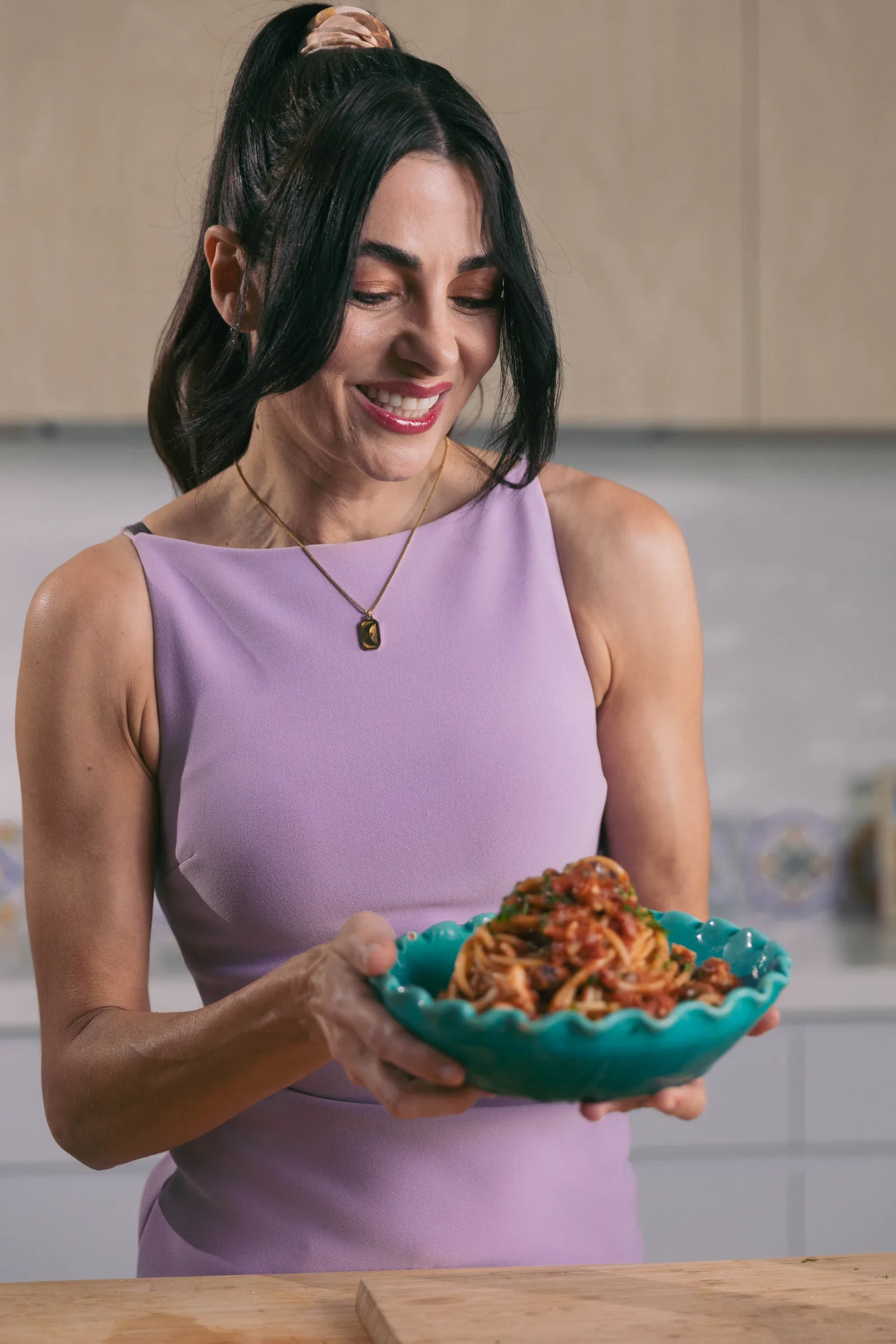
Tubular spaghetti with white fish puttanesca
With
Silvia Colloca
Tubular spaghetti in white fish puttanesca with anchovy, chilli and capers.
SERVES
4
About this recipe
Silvia Colloca's Neapolitan puttanesca built on a base of garlic, anchovy, chilli and capers, with flaked white fish folded through at the end. Tubular spaghetti holds the briny sauce better than the thin strands. Twenty minutes, no apology.
The addition of white fish to the traditional puttanesca is the modern Italian variation that pulls the dish from cucina povera into something closer to a full meal. The original puttanesca was the empty-pantry sauce, built from whatever was on the shelf (capers, olives, anchovy, tomato); flaking poached white fish through the finished pasta turns the side dish into a centrepiece without losing the soul of the original.
Tubular spaghetti (also called bucatini or perciatelli, the long pasta strand with a hollow centre) is the right shape for this sauce. The hole through the centre catches the briny liquid and the small pieces of caper and anchovy in a way that solid spaghetti cannot; each forkful comes loaded with sauce both outside and inside the pasta. San Remo's tubular spaghetti is the Australian-available version; substitute Italian-imported bucatini if you can find it.
Dry white wine (rather than the more commonly suggested pasta water) is the deglazing liquid that builds the sauce base. The wine adds acid and depth that water can't provide; reduces hard against the heat to concentrate the flavour. White fish (cod, snapper, blue eye, ling) gently poached in the sauce in the last few minutes of cooking, then flaked through with the pasta. Parsley leaves over the top; a glass of cold Falanghina.
Ingredients
- 400g San Remo Tubular Spaghetti (or regular spaghetti)
- 2–3 tablespoons Monini Classico extra virgin Olive Oil, plus more to finish
- 2 garlic cloves, thinly sliced
- 150mls dry white wine
- 1 small red chilli or a pinch of dried chilli flakes (to taste)
- 6 anchovy fillets in oil
- 2 tablespoons capers, rinsed
- 100g Monini pitted black Olive’s, roughly chopped
- 300g white fish fillets (such as cod or ling), skin and bones removed, cut into chunks
- 400g canned chopped tomatoes
- Salt, to taste
- Freshly ground black pepper
- A handful of fresh parsley, finely chopped
Method
1. Bring a large pot of salted water to the boil. While you’re waiting, start preparing the sauce.
2. In a large, wide pan, heat the olive oil over medium heat. Add the anchovies, olives, chilli and garlic. Cook gently for a few minutes until the anchovies melt into the oil and the garlic is soft and fragrant, but not browned.
3. Add the capers. Deglaze the pan with the white wine. Stir for about a minute, then add the chopped tomatoes. Let everything come to a gentle simmer.
4. Add the chunks of white fish into the sauce. Simmer gently while the pasta cooks — the fish will poach in the sauce and begin to flake apart.
5. Drop the pasta into the boiling salted water and cook until just before al dente, following the timing on the packet.
6. Once the pasta is ready, use tongs or a slotted spoon to lift it straight from the water into the sauce, bringing a bit of that starchy cooking water with it. Toss everything together over low heat for a minute or two so the sauce coats the pasta and the fish breaks up gently into the mix.
7. Finish with a drizzle of extra virgin olive oil and a handful of chopped parsley. Taste and adjust the seasoning if needed.
8. Serve straight away, hot from the pan, with maybe a crisp glass of white wine and a little extra parsley on top.

Silvia Colloca
Silvia Colloca is a Roman-born cook, opera singer and cookbook author who has spent the last decade documenting the regional cooking of Italy from her home in Sydney. She fronts Silvia’s Masterclass, working through the country one mother-recipe at a time. Her style is patient: fresh pasta by hand, long-rise focaccia, sauces built slow.
More from
Silvia Colloca
Explore other recipes


Inspiration Starts Here
Join the Savour & Wander Club for recipes, travel notes and first access to future member content.